


 Free Newsletter

Report: Prevailing-wage repeal hurts workers, paves way for out-of-state firms
Report: Prevailing-wage repeal hurts workers, paves way for out-of-state firms
By: Nate Beck, [email protected]//October 2, 2020//


 Listen to this article
Ever since Wisconsin repealed its prevailing-wage laws, blue collar workers have steadily been making less, construction CEOs raking in much more and taxpayers saving next-to-nothing on public-construction work.
Those are the conclusions of a report released on Friday by the nonprofit group The Midwest Economic Policy Institute, or MEPI. The findings fly in the face of many of the arguments that proponents of repealing prevailing wage had made in 2015 as they successfully pushed for the state to ban the wage standards on local projects and two years later when they did the same for state projects. MEPI, which has also examined the effects of similar repeals in Indiana and West Virginia, found Wisconsin has seen little benefit from doing away with minimum-wage rates on state and local projects. Blue-collar workers, in fact, have seen their wages fall by 5% since the repeal of prevailing wages and employer-provided health benefits have gone down by 4%.
Construction CEOs, meanwhile, are making 54% more, according to the report.
“Politicians promised Wisconsin taxpayers that eliminating local minimum wage standards on public construction projects would save money and improve bid competition,” said Frank Manzo IV, an author of the study and policy director of the Illinois Economic Policy Institute, the parent group of MEPI. “But repeal has delivered neither. Worse, it has functioned as a jobs program for businesses and workers from outside of Wisconsin, while slashing blue-collar workers’ wages and weakening the state’s construction industry as a whole.”
Dueling studies on prevailing wage
The report is the latest in a series of sometimes conflicting studies on prevailing wage. Different conclusions, for instance, were reached in a study the Associated Builders and Contractors of Wisconsin commissioned from the Wisconsin Property Taxpayers Alliance in 2015. That study found that the state’s methods of calculating the wages were resulting in artificially inflated pay for workers on public projects, ultimately pushing up the cost of those projects.
In May, the conservative Wisconsin Institute for Law and Liberty took aim at federal prevailing wages set by the Davis-Bacon Act, which still applies to federally funded work in Wisconsin. The report surveyed ABC members, finding that about two-thirds of them said they would be more likely to bid on public jobs if they didn’t have to pay federal prevailing wages.
John Mielke, president of ABC of Wisconsin, said the latest MEPI report was too new on Friday to offer extensive comments on. He did note, though, that the group relied on data from transportation projects, many of which remain subject to federal Davis-Bacon prevailing wages.
“The Midwest Economic Policy Institute has a history and perhaps an agenda,” Mielke said. “Each state and federal government determines or determined prevailing wage differently. (The Midwest Economic Policy Institute) has studied many prevailing wage laws, and likes them all.”
Out-of-state contractors
Besides finding evidence of falling pay for workers, the Midwest Economic Policy Institute’s report concluded that out-of-state contractors have been flocking to Wisconsin in the years following repeal. That has led to a 60% increase in out-of-state companies winning Wisconsin Department of Transportation contracts. WisDOT, meanwhile, has seen the average number of bidders competing for its projects drop by 16%.
Proponents of prevailing wage repeal argue the policy was artificially inflating the cost of road projects for Wisconsin taxpayers. The Midwest Economic Policy Institute’s report, in contrast, concluded that repeal has had “no statistical impact” on the average cost-per-mile of resurfacing or maintaining Wisconsin roads. Repeal has also not led to an increase in transportation projects that are coming in under budget.
Those findings back up a 2015 report from the nonpartisan Legislative Fiscal Bureau, which found that prevailing wages generally have no statistically significant effect on the cost of public construction. Jake Castanza, executive director of the Wisconsin Building Trades Council, said MEPI’s report reinforces what proponents of prevailing wage have long argued.
“The benefits to repealing prevailing wage are a mythical fairy tale that Wisconsin Republicans and billionaire merit-shop owners have sold the public through dishonest marketing and outright lies,” Castanza said. “This unflawed, fact-based study from the Midwest Economic Policy Institute shows us the truth, and we know that if we do not act now, our state will decline even further on the downward slide Scott Walker and his cronies have set path on.”
Effect on workers
The study generally found Wisconsin construction workers have been faring worse without state and local prevailing wages. Adjusted for inflation, Wisconsin construction workers on average saw their annual incomes drop by 5.1% between 2015 and 2018. Wages declined in Illinois and Minnesota during that period, too, but by only 1.7%, according to census data cited in the report.
The report also found construction workers have seen their employer-provided health-insurance benefits fall by 4% following repeal. Workers, for instance, were 3.7% less likely to have health insurance benefits from an employer once prevailing-wage policies were no longer in place.
In total, according to the report, repeal had cost Wisconsin workers $346 million in wage and salary income by 2018. Construction CEOs, meanwhile, saw their compensation rise by $111 million.
Turnover and training
The Midwest Economic Policy Institute’s report separately found that construction workers have become increasingly likely to leave the industry following repeal, and that Wisconsin was doing a worse job than its neighbors at recruiting new talent.
The average quarterly turnover in heavy civil engineering and construction increased by 7.8% between 2016 and 2018 in Wisconsin. Meanwhile in Wisconsin’s neighboring states Illinois and Minnesota, average quarterly turnover remained fairly flat in the same period, falling by only 0.5%.
Repeal has also led to an influx of contractors coming from outside the state to work on Wisconsin jobs, the report finds.
Out-of-state firms submitted about 9% of bids for WisDOT projects in 2015, before the repeal of prevailing wage on state projects. After repeal, the share of out-of-state bids rose to 13.3% — a 45.9% increase in total bids from outside Wisconsin.
Before repeal, out-of-state firms were winning nearly 9% of all construction bids. After the policy, these companies have won 14.3% of all WisDOT contracts— a 60.4% increase.
“The actual observed changes in public construction spending since repeal of prevailing wage in Wisconsin underscore the longstanding academic consensus that the substitution of high-skilled local workers by lower-skilled, lower-wage, nonlocal workers does not produce cost savings,” said Kevin Duncan, a study author and economist at Colorado State University-Pueblo. Follow @natebeck9
Related Content




Polls
 Loading ...
Today’s News
- Rooftop solar system at Appleton library will be increased
- After 50 years in the business, Tom Boldt retires
- Wisconsin Pre-Bid Meetings – Week of June 15, 2026
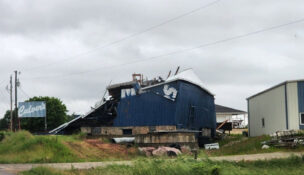
- Culver’s barn thanking farmers collapses after heavy storms
- Construction equipment maker will expand in Milwaukee’s north side
- High energy prices drive US producer inflation
- Interest rates, construction costs bury downtown hotel plan in Milwaukee
- Wisconsin enacting new residential electrical codes in the fall
- Affordable apartments in Milwaukee’s Harbor District gain financial foothold
- Zoning stalls for mixed-use redevelopment of North Shore Library
- Wisconsin homeowner accuses contractor of leaving remodeling job unfinished
- 200-unit riverfront apartment building gets OK in Milwaukee





Project Profiles
- First prefabricated bridge in US installed in Eau Claire County
- Illinois developer worked with Wisconsin contractor to build 258-unit Wauwatosa apartment complex
- VJS Construction raises the roof for Bruce Guadalupe Community School expansion project
- Microgrid pilot project will store energy for village affected by outages
- Dane County sees uptick in highway work zone crashes, on track to exceed last year
- The Hop streetcar will debut newest service route in fall with limited service
- FPC Live slims venue proposal to 1 downtown building
- Children’s Hospital urgent care center in Milwaukee gets first round of city approval
- With Sonag Construction shut down, feds move to block indicted owner from collecting leftover assets
- Four contractors selected to build border wall prototypes
- UW-Milwaukee’s Greenstreet shaping minds (and the city)
- Turning the Corner(s) (PHOTO SLIDESHOW)