


 Free Newsletter


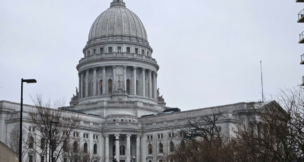
FILE - This file photo taken Feb. 17, 2011 shows protestors of Wisconsin Gov. Scott Walker's bill to eliminate collective bargaining rights for many state workers packing the rotunda at the State Capitol in Madison, Wis. (AP Photo/Andy Manis, File)
Unions win big as Dane County judge strikes down parts of Act 10
By: Ethan Duran//December 2, 2024//


 Listen to this article
A piece of legislation that clipped bargaining rights for public employees has been overturned.
Dane County Circuit Court Judge Jacob Frost on Monday wrote in a decision that parts of 2011 Wisconsin Act 10, which banned nearly all collective bargaining for most public employees, was unenforceable. Act 10 was a defining piece of legislation under former Gov. Scott Walker, who survived a recall after thousands of Wisconsinites protested at the State Capitol.
The ruling restores power to public sector workers who lost their collective bargaining power back to before 2011, the Associated Press reported. They will be treated the same as police, firefighter and other public safety unions that were exempted under the law, AP reported.
In November 2023, several public sector unions filed a lawsuit to overturn the landmark act. In July, Frost struck down part of Act 10 and said the law gave an unfair exemption to public safety workers from union limitations. In his decision Monday, he said the exemption was unconstitutional and added the exemption couldn’t be removed while leaving the rest of the law intact.
“Neither this court, the Court of Appeals nor the Supreme Court can decide how we believe the Legislature should have, but did not, define the ‘public safety employee’ group,” Frost wrote. “We cannot decide who should be included or excluded, absent guidance from the Legislature as to its lawful policy choices,” he added.
Democratic opponents argue that the law has hurt schools and other government agencies by taking away the ability of employees to collectively bargain for their pay and working conditions, AP reported.
Seven unions and three union leaders brought the lawsuit and argued the law should be struck down because it creates unconstitutional exemptions for firefighters and other public safety workers, AP reported. Attorneys for the Legislature and state agencies argued the exemptions are legal, were upheld by other courts and that the case should be dismissed.
In July, Frost sided with the unions and said the law violates equal protection guarantees in the Wisconsin Constitution by dividing employees into “general” and “public safety” employees, AP reported. He ruled that general employee unions, such as teachers unions, can’t be treated differently from public safety unions that were exempt from the law.
 Loading ...
Walker called the ruling “Brazen political activism” on the social media platform X. “This makes the April 2025 WI Supreme Court race that much more important,” he added.
Currently, the Wisconsin Supreme Court has a 4-3 liberal majority. But an election in April will decide the next majority for at least a year.
Robin Vos, the Republican Speaker of the Wisconsin State Assembly, said an appeal was on the way.
“This lawsuit came more than a decade after Act 10 became law and after many courts rejected the same meritless legal challenges,” Vos said in a statement. “Act 10 has saved Wisconsin taxpayers more than $16 billion. We look forward to presenting our arguments on appeal,” he added.
Biggest business group, unions react to Act 10’s overturn
Kurt R. Bauer, president and CEO of Wisconsin Manufacturers & Commerce, criticized the ruling and called for an appeal.
Following the decision, Wisconsin Manufacturers & Commerce (WMC) President & CEO Kurt R. Bauer released the below statement:
“This ruling is wrong on its face and is inconsistent with the law,” Bauer said in a statement. “Act 10 is not only constitutional, it is a critical tool for policymakers and elected officials to balance budgets and find taxpayer savings. Thanks to Act 10, the state, local governments and countless school districts have saved billions and billions of dollars – protecting Wisconsinites from massive tax increases over the last decade-plus,” he added.
“WMC and our members hope this ruling will be appealed and that Act 10 will be reinstated as quickly as possible,” Bauer noted.
Stephanie Bloomingdale, president of the Wisconsin AFL-CIO, said in a statement Act 10’s passage led to lower wages and staff shortages in public service. Working people would enter the next year reenergized for union organizing, she added.
“Nearly 14 years after Scott Walker in his own words “dropped the bomb” on Wisconsin public employees, Wisconsin workers can celebrate as the judicial branch restores collective bargaining rights to public employees in Wisconsin. Declaring Scott Walker’s union-busting Act 10 unconstitutional and void, over 60 sections of the 2011 anti-union law have now been struck down,” Bloomingdale said.
“Act 10 has done great harm to working people in our state and has done great damage to the public services our families depend on every day. It has lowered wages and led to staff shortages and long-term vacancies in key public service positions. Working families in Wisconsin will greatly benefit from the restoration of collective bargaining rights. Restoring union freedoms to Wisconsin workers will strengthen Wisconsin’s middle class, lift up the voices of workers, and lead to better public services for our communities,” Bloomingdale continued.
“Working people in Wisconsin will head into 2025 with a renewed sense of solidarity and a reinvigorated commitment to union organizing so that every worker who wants to be in a union can freely do so. It’s time to turn the page on the dark days of Scott Walker’s union-busting and move forward together with full worker freedoms and union rights for all in Wisconsin,” Bloomingdale continued.
The law was Walker’s signature legislative achievement in office. Using Act 10 as a platform, he made a presidential run in 2016 and lost.
Frost appeared to have signed the petition to recall Walker from office in 2012, AP reported. None of the attorneys sought his removal from the case and he didn’t step down. Frost was appointed to the bench by Democratic Gov. Tony Evers, who signed the Walker recall petition, AP reported.
After Act 10 passed, there was a sharp decline in union membership across Wisconsin. In 2022, the Wisconsin Policy Forum reported that since 2000 the state saw the largest decline in its unionized workforce.
In 2015, Wisconsin Republicans passed a right-to-work law that stripped power from private-sector unions.
Act 10 was challenged in court before by players in the construction industry. In 2020, an appeals court rejected a lawsuit by the Operating Engineers Local 139 and two members who claimed three parts of Act 10 violated their First Amendment rights to free speech and association.
Related Articles

Related Content




Polls
Loading ...Today’s News
- Contractor teaches Milwaukee middle school students about construction careers
- Construction begins on Milwaukee’s 373-unit 100 East apartment conversion
- Wisconsin worker deaths slightly decline but remain high
- After neighbor concerns, Milwaukee alderwoman delays apartments review
- Dane County slaps solar company execs with theft by contractor charges
- Priciest option for Wauwatosa city hall and library project is $107M
- Residents TID petition seeks more oversight on public spending
- TOP BIDDERS: The biggest recent winning bids from around Wisconsin | May 19
- Judge orders partial pause on Line 5 construction in northern Wisconsin
- Backlash continues against Shorewood affordable housing proposal
- Worker hospitalized after 30-foot fall at Madison construction site
- Wisconsin announces $248M for essential projects statewide





Project Profiles
- First prefabricated bridge in US installed in Eau Claire County
- Illinois developer worked with Wisconsin contractor to build 258-unit Wauwatosa apartment complex
- VJS Construction raises the roof for Bruce Guadalupe Community School expansion project
- Microgrid pilot project will store energy for village affected by outages
- Dane County sees uptick in highway work zone crashes, on track to exceed last year
- The Hop streetcar will debut newest service route in fall with limited service
- FPC Live slims venue proposal to 1 downtown building
- Children’s Hospital urgent care center in Milwaukee gets first round of city approval
- With Sonag Construction shut down, feds move to block indicted owner from collecting leftover assets
- Four contractors selected to build border wall prototypes
- UW-Milwaukee’s Greenstreet shaping minds (and the city)
- Turning the Corner(s) (PHOTO SLIDESHOW)