


 Free Newsletter


(Deposit Photos)
‘I am an electrician. Nothing shocks me anymore’
By: BridgeTower Media Newswires//June 9, 2025//


 Listen to this article
Whether you work for a large, respectable company that mandates and encourages electrical safety by providing PPE, training, safety policies and safety procedures. Or you work for, or consider yourself, a “Mom and Pop” shop, and safety is not really one of the top priorities of the company values.
Electrical safety at your workplace is ultimately left up to you.
Even if you feel the requirements of NFPA 70E don’t apply to you, the fact of the matter is, it does. If you think you cannot afford to provide an electrical safety program for you and your employees. Think again! You cannot afford not to have one. After the accident is when the real money is spent.
Between the lawyers, insurance claims, medical bills and OSHA citations, good luck trying to stay in business. Being proactive just makes good business sense but it also shows your employees that you care and want to keep them healthy and safe. If you fail to plan, you are planning to fail. As an employee, you have the right to stand down if you feel your safety or the safety of others might be at risk.
The mindset of the trade is mixed when it comes to energized work. Electrical workers over the age of 40 to 50 years old may balk at a policy that requires the electrical system to be placed into an electrically safe condition while working on it. While the newer generation, if trained, will gladly except company policies that eliminate the hazard and help keep them and others safe. I want to encourage everyone to look at our profession as one with inherent risks and dangers. We must eliminate the hazards to the best of our ability so you can continue to go home after every workday to your loved-ones and live a life without a debilitating injury. I personally know of six people that have survived an arc flash event with life debilitating injuries.
There is a 50/50 result of an electric shock. There is a 50% chance of pain and discomfort. Or 50% chance of injury or death! The odds are not in our favor. The hazards from just a slight electric shock are still being studied and not fully understood by those in the medical profession. Long-lasting neurological, physical and psychological complications are being reported, recognized and studied.
I want to address how to help eliminate shock as well as an arc flash event. Understanding and implementing NFPA 70E may seem like an overwhelming task for most smaller businesses. However, there are eight simple steps we all can at least consider minimizing the hazard and keeping your people safe no matter what size company or how you feel about de-energized work and complying with NFPA 70E.
First, look at the documentation. In section 130.2(A) and (C), of NFPA 70E you can see requirements for an Energized Electrical Work Permit (EEWP) when work is done within the restricted approach boundary and is not exempted in the exceptions. For most of our electrical systems this boundary is a distance of 12 inches measured outward in all directions from the exposed energized parts rated at 750 volts down to 151 volts phase-to-phase. One of the exceptions is testing, troubleshooting or voltage measuring.
In all cases proper PPE must be worn while doing this process or while you are within the limited approach boundary of 3 feet, 6 inches. The Category of PPE is selected from information found on the Arc Flash label or the task table found in NFPA 70E, 130.7(C)(15)(a) for ac systems and (b) for dc. If the voltage is 50 volts or more and if you are not testing or troubleshooting, you must get an energized work permit to do the task. This permit is not from the city or county or the AHJ. We generate it and it must be signed off by many various stakeholders, including owners, supervisors, safety personnel and even the crew doing the work.
The EEWP is basically the last door to shut before the point of no return. Before commencing work on the exposed energized electrical parts everyone must sign off and agree that this is the only option, and additional hazards will exist if power is interrupted. When signatures are required, it typically will force people to reevaluate the task and look for ways to schedule an outage with the timeframe and costs of the outage to be predictable and fixed. Or the other option is risking an unscheduled outage with the costs and timeframe to exceed all expectations. There may be cases where the replacement of equipment may not be available locally, require endless lead-times or even just obsolete. This information should be included in the EEWP.
To avoid all of this, just put the system into an Electrically Safe Working Condition (ESWC). In NFPA 70E, Article 120, Section 6, you will find the eight-step process to do this. Performing this process itself does not bring you in compliance with 70E but it may help in saving a life or risking injury. An ESWC is not as simple as just turning the power off and testing for the absence of voltage. All eight steps must be considered and if necessary implemented if applicable. The eighth step might not be applicable, but it should at least be considered.
Step 1: Check up-to-date drawings diagrams and identification labels and tags to help accurately locate the upstream source for disconnection. Using Arc Flash labels in compliance with 110.16 of the NEC as a source of information can also help.
Step 2: After opening the downstream loads to minimize any arcing while opening the upstream device, open the disconnecting means for each power source. Some systems may have more than one source. Be mindful of alternative energies and their supplies. Solar power. Generators. Batteries
Step 3: If possible, visually verify the blades of the disconnecting means are open. If it is a draw-out type breaker, make sure it is, in fact, drawn out.
Step 4: Release stored energy. This would include inductive or capacitive electrical energy.
Step 5: Block or relieve stored nonelectrical energies. This could be hydraulic, pneumatic, or kinetic energy that also serves the equipment that you intend to work on. This could apply to machines or other mechanical equipment or processes.
Step 6: Apply LOTO (Lock-out, Tag-Out). Do this in accordance with the policies and procedures established by your company and/or the host contractor or client your employer was hired to work for.
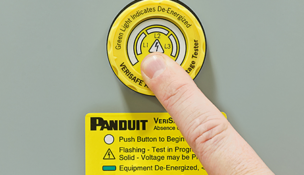
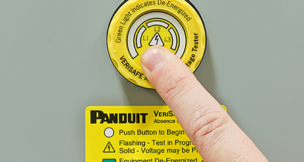
Step 7: While using the correct testing equipment verify the absence of voltage. Make sure the tester is rated for the voltage that you are testing. Test your tester first. This is commonly called a LIVE-DEAD-LIVE test. Then test each phase as well as each phase to ground. Test the tester again after verifying absence of voltage. Tip: Do not hold the tester in your hands if you can avoid it. Do not rely on noncontact, induction type, testers for this process. At least not for systems under 1000 volts. This type of tester only works on AC (alternating current) and cannot read voltage on conductors with metallic jackets or shielding. New, permanently installed, absence of voltage, testers are permitted. I would still verify before touching the electrical parts especially if the equipment was not under my control before I started to work on it. It is at this step where most accidents happen so make sure you are qualified to select and use the testing equipment safely. Voltage rated gloves are required when testing. {130.7(C)(7)}
Step 8: And finally, if there is the possibility of an induced voltage by induction or if capacitive charges are present, apply temporary protective grounding equipment. If properly installed and sized correctly this will also cause the immediate opening of the protective device if the circuit is unintentionally re-energized. Just one more level of safety. This is a temporary bolted-fault condition
In closing, you can apply all, or most, of these steps while working on or near your energized electrical equipment. I would suggest starting a new mantra, “If the plumbers shut off their systems, why don’t we?” Why don’t you? Almost every time I worked on a client’s electrical problem the question was asked of me. “Are you going to shut of my power?” They expect us to do it. NFPA 70E requires us to “eliminate” the hazard in section 110.1. So why do we think it is not important? Or maybe, there is still this sense of pride while doing it dangerously. How much pride does it take to recover from an electric shock or other serious injury?
Related Articles

Related Content




Polls
 Loading ...
Today’s News
- Wauwatosa shops for specialty grocer
- Wisconsin allocates nearly $50M in tax credits for housing projects
- Contractors eager to fill positions as open construction jobs tick up to 259,000
- Wisconsin awards $130,000 for construction and trade worker training
- Milwaukee manufacturer plans expansion with data center growth
- Megaprojects push Milwaukee construction costs above U.S. average
- Brown County drops data center moratorium proposal
- Cobalt Partners share North Shore Library development plans
- Zignego Co. scores $45M highway contract at start of construction season
- New Berlin residents cold on Rockwell Automations plan
- TOP BIDDERS: The biggest recent winning bids from around Wisconsin | June 1
- WisDOT studying redesign of Walker’s Point interchange



Project Profiles
- First prefabricated bridge in US installed in Eau Claire County
- Illinois developer worked with Wisconsin contractor to build 258-unit Wauwatosa apartment complex
- VJS Construction raises the roof for Bruce Guadalupe Community School expansion project
- Microgrid pilot project will store energy for village affected by outages
- Dane County sees uptick in highway work zone crashes, on track to exceed last year
- The Hop streetcar will debut newest service route in fall with limited service
- FPC Live slims venue proposal to 1 downtown building
- Children’s Hospital urgent care center in Milwaukee gets first round of city approval
- With Sonag Construction shut down, feds move to block indicted owner from collecting leftover assets
- Four contractors selected to build border wall prototypes
- UW-Milwaukee’s Greenstreet shaping minds (and the city)
- Turning the Corner(s) (PHOTO SLIDESHOW)