


 Free Newsletter

Lean and integrated delivery drive speed, certainty, client value

Damon Jeffrey is director of design phase management in Mortenson’s Portland office. Contact him at 971-202-4100 or [email protected].
Lean and integrated delivery drive speed, certainty, client value
By: BridgeTower Media Newswires//October 17, 2025//


Those of us in development and construction understand that the most formative and often challenging stretch of a project comes before ground is broken. Design alone can take seven to nine months, and permitting can stretch another six to nine months. Do that end-to-end and you’re looking at a year and a half before dirt moves – a luxury most capital projects can’t afford in today’s market.
That’s where Lean principles and best practices in integrated delivery — bringing design and construction teams together from the start, as in progressive design-build — come in. Through these, we can create a framework for early alignment between owners, builders and designers: shared values, clear decision-making structures, and a focus on what truly adds value. The result: a team that moves fast, stays focused and eliminates waste while creating a great product — the kind of efficiency and outcome that can be achieved only when everyone is pulling in the same direction.
A success story in six months
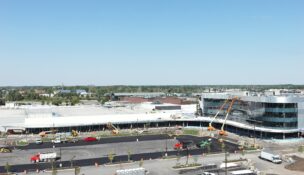
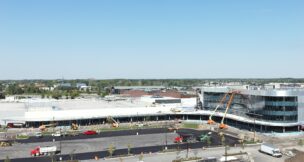
When Mortenson was awarded the project, the owner gave us a fixed end date, which meant we needed to accelerate design and permitting. We knew from the outset that it would be aggressive, and we also knew our team had the experience, skills and collaborative culture to lead us through the challenge. The owner needed a finished facility to attract new customers, which meant every day until then was costly without revenue coming in to offset the expense. The owner’s prospective customers prefer to see real equipment in place and how the space would function when fully operational before signing a manufacturing agreement. Speed to market, in this case, wasn’t just about a milestone on paper — it was about the owner being able to shift into a revenue position.
To meet the challenge, we had to make sure everyone understood what mattered most and when decisions needed to be made. This meant creating a clear Values Definition and Conditions of Satisfaction to achieve full Values Alignment up front – reducing the risk of errors and rework down the line. Together, we defined what success looked like, how it would be measured, and who was responsible for which decisions. By taking the time to align early, we built a shared sense of purpose that allowed the team to move efficiently, make confident decisions and avoid costly issues later.
To prevent future schedule impacts, we also aligned with the municipality early to reduce the possibility of the permitting process stalling the project. We didn’t just hand officials the drawings and hope; they were part of the process with us.
Ultimately, the team met the target. Ground was broken within six months of award, positioning the owner to begin attracting new customers as planned. The success reinforced the power of early alignment, disciplined decision-making and proactive collaboration with permitting partners.
Lessons we can carry forward
Each project presents unique challenges — funding mechanisms differ, permitting processes vary by jurisdiction, and timelines are influenced by market conditions and supply chain dynamics. Add in variations in project type, decision-making structures, or community engagement requirements and it becomes clear that there’s no single formula applicable everywhere. But even with those differences, there are lessons in Lean principles and integrated delivery best practices worth carrying forward.
Lean brings the mechanics: target value delivery, pull planning and continuous improvement. Integrated delivery breaks down the barriers and makes it easier to foster a successful culture: a project-first approach, collaboration over silos, and shared risk and reward. Together, they form the operating system that allows us to move faster with more confidence.
Projects develop momentum when they start with Values Alignment. By getting full agreement on the project priorities at the outset, the team can move more decisively and avoid delays down the road. Otherwise, if you don’t know what the filter is for making decisions, every crossroad is an opportunity for misalignment and delay.
While specificity is necessary to achieve project success, some flexibility should be built into the timeline. Owners often need room to work with internal stakeholders or market to future customers, while builders need clarity to build. As long as there’s mutual agreement up front that once a decision gate passes, it’s locked, then discipline protects schedule and cost.
Additionally, permitting moves faster when municipalities are treated as partners. Waiting until you’re ready to submit plans is too late. When you treat them as part of the team, they usually respond in kind.
Speed is possible when the entire team commits to working together to keep a project’s tempo. Nothing stalls a project faster than waiting for one party to make a decision. Ensuring that decision-makers and reviewers are aligned on the timeline and available at decision points helps keep the project momentum going.
Finally, the best teams embrace continuous improvement. At the end of every project, we ask, “What could we have done better? Where did waste creep in? Where did alignment slip?” That reflection makes the next project smoother. It’s not about chasing perfection; it’s about refusing to accept that the way we’ve always done it is the best we can do.
Making momentum the standard
In many projects, the stretch between award and ground being broken runs 12 to 18 months, let alone the time it can take to reach project completion. That’s the reality of how design and permitting often unfold. But when we’re aligned on values early, set clear decision points and bring municipalities into the process as partners, we can move with greater speed and deliver what the customer wants and needs.
Achieving the six-month timeline from project award to ground being broken for the pharmaceutical manufacturing facility owner wasn’t a fluke. It was the result of discipline, alignment and a collaborative, project-first mindset. When we stay aligned, keep our commitments and put the project priorities first, speed and confidence follow.
Damon Jeffrey is director of design phase management in Mortenson’s Portland office. Contact him at 971-202-4100 or [email protected].
Related Articles

Related Content





Today’s News
- Fraser and HD Hyundai eye Superior shipyard for modernization
- TOP BIDDERS: The biggest recent winning bids from around Wisconsin | July 27
- Interstate 41 work continues with $167M contract
- Sixth Street roundabout in Milwaukee could be reworked
- Wisconsin lawmaker accepts award for helping pass DACA bill
- Plans for $107M Wauwatosa library gain momentum
- Trump signs additional tariffs on Canadian steel, aluminum and lumber
- Wisconsin Pre-Bid Meetings – Week of July 27, 2026
- Feds commit $5B to AI-powered research for construction
- Worker files NLRB complaint against Wisconsin painters union
- Lawsuit challenges Wisconsin Supplier Diversity Program
- Sheboygan TID proposal targets public incentives of $5M or more







Project Profiles
- First prefabricated bridge in US installed in Eau Claire County
- Illinois developer worked with Wisconsin contractor to build 258-unit Wauwatosa apartment complex
- VJS Construction raises the roof for Bruce Guadalupe Community School expansion project
- Microgrid pilot project will store energy for village affected by outages
- Dane County sees uptick in highway work zone crashes, on track to exceed last year
- The Hop streetcar will debut newest service route in fall with limited service
- FPC Live slims venue proposal to 1 downtown building
- Children’s Hospital urgent care center in Milwaukee gets first round of city approval
- With Sonag Construction shut down, feds move to block indicted owner from collecting leftover assets
- Four contractors selected to build border wall prototypes
- UW-Milwaukee’s Greenstreet shaping minds (and the city)
- Turning the Corner(s) (PHOTO SLIDESHOW)