


 Free Newsletter

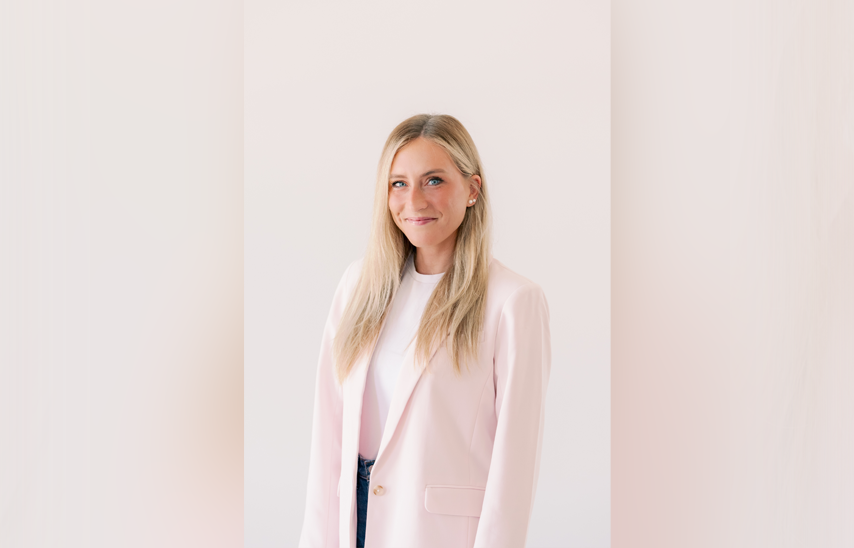
Libby Morris. (Cass Stone/CMAE Photography)
ON THE LEVEL: What happens when a project engineer hits ‘post’
By: Ali Teske//April 27, 2026//


By ALI TESKE
Special to The Daily Reporter
In 2022, a TikTok reviewing fashionable, but functional steel-toed work boots for women reached over 1.7 million views. The social media account behind it belongs to Libby Morris, a project leader in the new product development division for a Milwaukee-based company known for making consumer products in the power tool industry. She has a degree in mechanical engineering, working in the construction industry for six years. And through those six years, she’s amassed a following over 145,000 combined followers on TikTok and Instagram. Her handle is LibbyBontheLabel and her videos garner thousands of views as she shares her life as a construction professional, property owner, marathon runner, and more, sharing her perspective on everything from skin care and office outfits to personal finance.
Morris recently sat down with The Daily Reporter to discuss being a woman in construction and how influencing is more than just a trendy side-hustle.
TDR: You operate in two very different industries, construction and influencing. They’re not usually used in the same sentence. Do those two worlds still feel separate to you, or is it more connected than people would assume or think from the outside?
Morris: I think what is connected and the strengths that I utilize from influencing in my day-to-day job, is the public speaking aspect of it. So much more of engineering and corporate in general is selling your ideas than I’d realized. If you can’t communicate and articulate in a concise way and get people to buy in, then you don’t get anything done.
I’ve got in my fair share of practice filming myself and making videos, which is speaking and trying to do storytelling and trying to make things concise. When you’re making a video for social media, you’re trying to get it to be 60 seconds or less. And a lot of times that’s kind of also all you have with executives to change or drive decisions.
TDR: Have you ever felt there’s some tension between being publicly visible? Then there is this stigma about influencers and content creators and being taken seriously. Have you felt that at all?
Morris: So, it’s interesting, and maybe it’s because of content I post. I’ve been with this company for four years now, but I was posting on social media before I started with this company. When I was interviewing, I actively made it known that I do this on the side. It’s a creative outlet for me. I didn’t want to have to move to a company where that was shameful or not something that they’d celebrate. They welcomed that with open arms and thought it was cool that I was taking out a personal endeavor outside of my nine-to-five. I think I have gained some respect. I’m sure there are some people that see my social media and scoff at it, but for the most part, I luckily haven’t run into a lot of those people.
TDR: What drew you to mechanical engineering, initially?
Morris: My career path into engineering, I feel like is not like many. I find oftentimes people who are engineers, you know, they went to science camp or engineering camp growing up. I went to art camp. It makes sense, right? I like to do the social media stuff. But something I talk about a lot on social media is I’m also very money driven. I have such a deep passion for advocating for women to have financial security and financial independence because that’s often something we don’t talk about as women.
And so, when I was going into college and I was looking at my earning potential with degrees in art, I was faced with the shocking reality. I grew up in a place where there were financial struggles. So, if I’m going to take on this financial risk of going to college and taking out all these loans, what is my payback ultimately? I looked at college with the mindset that art will always be there for me. I can always whip out my watercolors and focus on honing in that skill. I’m going to treat college as a transaction.
What can I do that has maybe a little bit higher earning potential but is also more in a creative space? That’s kind of how I stumbled upon mechanical engineering. What drew me, specifically, was more so the 2D drawing aspect that you go through when you’re making products. And then I just kind of took those passions of wanting to advocate for women and mechanical engineering fueled those passions and it was kept me motivated to stay in the industry.
TDR: You sit at the center of a lot of coordination. What do you think in your mind separates a good project engineer and/or project coordinator from a bad one? What do you think sets yourself apart?
Morris: Something I’ve learned to be successful in my job is to know your audience. The way that you receive information is going to be very different than the way that I resonate and receive information. And once you start to learn what makes people tick and how you grasp their attention, you can tailor any message to a way that they’ll resonate with and they’ll understand. It’s like this art or this skill of communicating with people who have different strengths and come from different backgrounds.
TDR: And that ties into influencing as well. Your online presence is very authentic, talking about your marathon training to skincare to your Saturday front desk job. While you’re working in a traditionally male-dominated field, how do you think about showing up fully as yourself, but also for yourself in both spaces.
Morris: For me, it’s all about expressing myself. That is so important, whether it is social media, engineering, or anything else I’m doing. I find that through creating outfits, doing my hair, putting on makeup, doing my nails. It’s not something that you see a lot in the male-dominated industries, so I kind of feel there’s a stigma where if you do show up, fully as yourself, you won’t be taken as seriously. I find that you build credibility through actions and building trust with team members so much more than what you’re wearing that day.
TDR: You’re balancing a demanding career, brand partnerships, training, property management and all of the above. What does your decision-making process look like when it comes to where you’re investing your time and energy?
Morris: I feel like what makes me tick is — and a challenge that a lot of women face — eventually I would love to start a family. When that takes place in my life, all of these things are going to come crashing down, and that’s going to become number one. For me, it’s how can I make the most of my time now and almost be selfish. For better or for worse, a sleep when you’re dead mentality. This is my time to do it all. What are all the ideas that I have and how can I take action on them and see them through? And I think that’s why I have a lot of these like multi-faceted hobbies. Almost like plates that I’m spinning at the same time because now’s the time.
TDR: There’s a growing generation of professionals who want to have strong careers but also have visible platforms and side hustles that are a great way to make money if you can be successful at them. From your perspective, and taking your specific industry into consideration, do you think sometimes those ambitions can compete with each other or do they reinforce each other?
Morris: I think it’s all about how comfortable you are with the level of authenticity that you’re sharing online. And something that I try to remind myself, any time I go to hit post on a video, if my manager’s manager were to see this video, would I feel like it reflects poorly on my character? I think that question is much different than, “would I be embarrassed?” You can be embarrassed. Post that all day long. But if I’m displaying something online that I would feel lowers my credibility or integrity in the workplace, that’s when I kind of have a second thought, and go, “is this really something I should be posting?”
My advice, if you want to start posting online, if you have a career and you want to start doing any side hustle, you have to get over the fear that people will see it. People you work with will see it. That’s why you post, at the end of the day, because you want people to see it.
TDR: Was posting online and influencing something that came from the pandemic era of, “what else is there to do?” Or if you were treating college like a transaction, was it to find an outlet for the arts and that outlet at the time was influencing for a lot of other people?
Morris: It was the latter. It started in the pandemic era, but it goes back even further. I remember in college, I used to watch beauty influencers on YouTube. COVID gave myself and a lot of other people the time, freedom and the need for an outlet to keep yourself busy. When things got “back to normal,” I had built a following that I didn’t feel embarrassed to tell people about it.
TDR: At what point did you feel like it clicked?
Morris: I think it was right around after I surpassed 10,000 followers on TikTok. I remember I was at the grocery store, and I had one of my very first videos go viral. And viral for me was like over 100,000 views. That was the first moment I thought this could actually be something.
TDR: Was there a moment in your construction career where you felt the similar “click?”
Morris: Honestly, I’m still wondering when that moment’s going to be. There’s always going to be some level of imposter syndrome with my job. And I want to say that because when I was first starting out, especially in a male-dominated industry, I would look to people were five to 10 years ahead and thought they for sure have it all figured out and eventually I’ll get there one day. I just realized, no, everybody’s always still figuring it out.
Maybe when I got this current role, that was a pinch-me moment. When I had my first job out of college, it was kind of one of those things where you’re applying to a million jobs and you’re just fingers-crossed and you to land it somewhere. Like I just need to get my foot in the door. And I did. I got my foot in the door somewhere and wondered, “is this just luck?” So, when I did my first career pivot and got an interview and eventually a job offer, that was the pinch-me moment where this wasn’t just luck. There’s validation in that.
TDR: Any advice for future construction professionals?
Morris: When I was in college, I craved a community of women who were going through the same thing as me. There was only maybe five of us women who were going through the engineering curriculum and I leaned on them, of course. But I hurt for that girl who, you know, thinking back to little me being a freshman, who would walk around campus hopeless and clueless and had no idea. That is what motivates me to continue to post on online. It’s like, my hope is someone out there is going through something very similar to what I did in school and trying to figure it out and they stumble upon my videos and they go, “look, that’s girl’s five to 10 years out of college, that could be me,” and it helps to give them motivation to push forward and pursue. We need more women solving problems, whether it’s in the construction industry, engineering, or any industry. We need more women’s minds solving problems. Diversity is so important to drive innovation and drive more efficient ways of tackling these huge issues on Earth.
If there’s something you want to do, I hope I can be proof to go out and do it. Nobody in my family was an engineer. I feel I don’t look like I would be an engineer. It was something that I put my mind to and I said, “hey, I’m going to go out and do it.” Who cares if you look silly doing it? As long as you have that feeling and that authenticity and integrity at the end of the day.
Related Articles

Related Content




Today’s News
- Wisconsin lawmaker accepts award for helping pass DACA bill
- Plans for $107M Wauwatosa library gain momentum
- Trump signs additional tariffs on Canadian steel, aluminum and lumber
- Wisconsin Pre-Bid Meetings – Week of July 27, 2026
- Feds commit $5B to AI-powered research for construction
- Worker files NLRB complaint against Wisconsin painters union
- Lawsuit challenges Wisconsin Supplier Diversity Program
- Sheboygan TID proposal targets public incentives of $5M or more
- TOP BIDDERS: The biggest recent winning bids from around Wisconsin | July 21
- State warns of workers’ compensation scam targeting victims
- Washington County housing initiative brings back young homeowners
- South Milwaukee apartment project canceled after financing shortfall




Project Profiles
- First prefabricated bridge in US installed in Eau Claire County
- Illinois developer worked with Wisconsin contractor to build 258-unit Wauwatosa apartment complex
- VJS Construction raises the roof for Bruce Guadalupe Community School expansion project
- Microgrid pilot project will store energy for village affected by outages
- Dane County sees uptick in highway work zone crashes, on track to exceed last year
- The Hop streetcar will debut newest service route in fall with limited service
- FPC Live slims venue proposal to 1 downtown building
- Children’s Hospital urgent care center in Milwaukee gets first round of city approval
- With Sonag Construction shut down, feds move to block indicted owner from collecting leftover assets
- Four contractors selected to build border wall prototypes
- UW-Milwaukee’s Greenstreet shaping minds (and the city)
- Turning the Corner(s) (PHOTO SLIDESHOW)