


 Free Newsletter

(Deposit Photos)
Architecture billings score low, but Wisconsin firms remain busy
By: Ethan Duran//June 26, 2026//


 Listen to this article
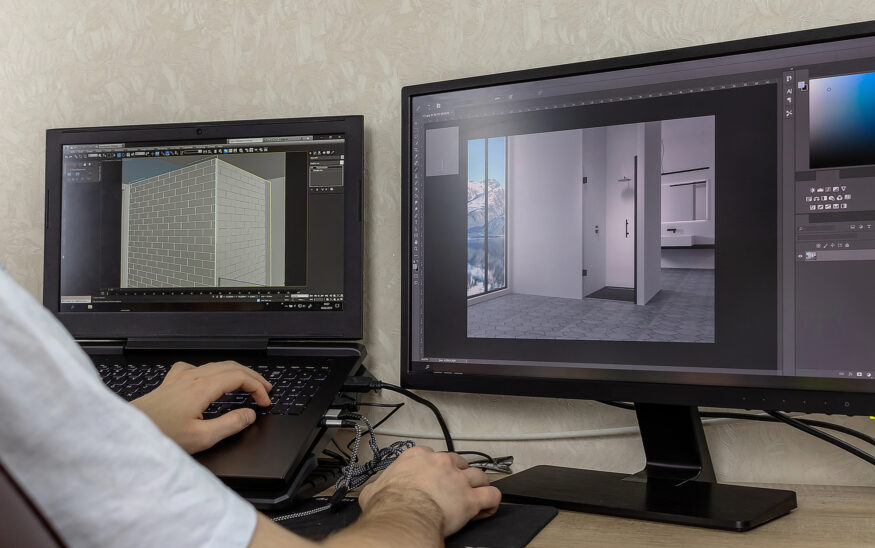
Several Wisconsin architecture firms said they’ve been busy this year with a mixed bag of project types, including healthcare, higher education and housing.
The American Institute of Architects’ Architecture Billings Index, a monthly score used to look ahead at spending and activity in nonresidential construction, scored 44.5 in May 2026. That’s the lowest level the score has seen since January with 43.8. Scores of 50 or higher are typically a sign of healthier construction activity.
Institute officials said the latest score likely reflected geopolitical conflict, higher gas prices and inflation causing clients to pause on new projects.
A small handful of architectural firms based in Wisconsin, including ones working outside the state, said they were still finding consistent work. One noted they haven’t seen a large slowdown in any of their sectors. However, projects are under increasing scrutiny by clients looking to avoid additional costs.
Kahler Slater, a Milwaukee-based firm with work across the U.S., saw a steady stream of requests for proposals across different sectors since January, said Glenn Roby, CEO of Kahler Slater. The firm works on cultural and civic, healthcare, hospitality, office, residential projects and more.
With varying project activity by region, the firm has seen interest in high-end hospitality, multifamily, healthcare, community recreation and health sciences education projects, Roby noted. Healthcare and healthcare-related sectors also remained active, and organizations such as the University of Wisconsin helped drive higher education and recreation projects.
“For example, many colleges and universities are investing in health sciences programs to prepare the next generation of providers while the healthcare industry is continuing to respond to a more competitive marketplace and regulatory shifts,” Roby said.
Clients appear to be shifting to fixing existing properties instead of starting new construction projects, he added.
“Across sectors, we’re seeing a notable shift toward renovations and adaptive reuse projects, as organizations prioritize maximizing existing assets rather than making large new capital investments,” Roby said. Demand for flexibility was also growing, as “Projects are expected to do more by supporting multiple uses, evolve over time and deliver measurable outcomes.”
Economic pressures, rising construction costs and changing operational needs are pushing organizations to be strategic about how they invest, Roby said.
“This is leading to more phased projects, deeper pre-design analysis and a stronger emphasis on long-term value rather than speed to market,” he added.
For AG Architecture, there were more development opportunities in senior living projects and more interest in projects with cottages and independent living options, said Eric Harrmann, a chief design officer at the Wauwatosa-based firm.
AG Architecture works on master planning, senior living, multifamily, mixed-use and retail projects in Wisconsin, Illinois, Florida and Texas. Some of their projects include Belle City Square in Racine and Plymouth Place in La Grange Park, Ill.
The firm said multifamily development remained solid in the Midwest, “especially for experienced developers with a strong sense of consumer preferences.”
Milwaukee-based Stephen Perry Smith Architects officials said their firm had a strong presence in the multifamily residential market and was working on several multifamily projects with more opportunities ahead.
“Our extensive multifamily experience is one of the key factors driving our continued growth,” Stephen Perry Smith Architects officials said. “We address the unique challenges of this market by designing communities that serve residents, strengthen neighborhoods, and support our clients’ goals.”
In May 2026, Wisconsin municipalities issued 462 permits for buildings with five or more residential units, compared to 1,566 multifamily permits in May 2025, data from the U.S. Census Building Permits Survey showed. Since January, there were 3,688 multifamily permits issued statewide; in all of 2025, state municipalities issued 10,536 multi-family permits.
Related Articles

Related Content



Polls
 Loading ...
Today’s News
- Groundbreaking set for $16M NeuVue mixed-use development in Milwaukee
- Architecture billings score low, but Wisconsin firms remain busy
- Wisconsin Pre-Bid Meetings – Week of June 29, 2026
- Meta, ABC partner on construction career academy amid data center boom
- The Gund Co. plans 110,000-square-foot expansion in Waukesha
- Milwaukee airport Amtrak project cost doubled since groundbreaking
- Tech giant sues Wisconsin regulator over data center restrictions
- World’s most powerful supercomputer project completed in Wisconsin
- Waukesha to consider final site plan for INNIO expansion
- New Land Enterprises proposes 25-story Milwaukee condo tower
- Civil engineering firm moves into new Cedarburg office
- TOP BIDDERS: The biggest recent winning bids from around Wisconsin | June 23







Project Profiles
- First prefabricated bridge in US installed in Eau Claire County
- Illinois developer worked with Wisconsin contractor to build 258-unit Wauwatosa apartment complex
- VJS Construction raises the roof for Bruce Guadalupe Community School expansion project
- Microgrid pilot project will store energy for village affected by outages
- Dane County sees uptick in highway work zone crashes, on track to exceed last year
- The Hop streetcar will debut newest service route in fall with limited service
- FPC Live slims venue proposal to 1 downtown building
- Children’s Hospital urgent care center in Milwaukee gets first round of city approval
- With Sonag Construction shut down, feds move to block indicted owner from collecting leftover assets
- Four contractors selected to build border wall prototypes
- UW-Milwaukee’s Greenstreet shaping minds (and the city)
- Turning the Corner(s) (PHOTO SLIDESHOW)