


 Free Newsletter


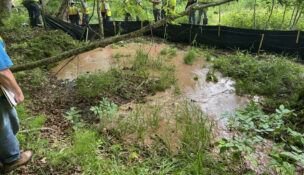
The Wisconsin Department of Natural Resources plans to grant an incidental take of the starhead topminnow, a rare and small fish, as construction crews replace the I-39/90/94 bridges over the Wisconsin River. Biologists will move the fish by hand to a safe location. (Photo courtesy of the Wisconsin Department of Transportation)
Little fish makes big splash on Wisconsin River bridge project
By: Ethan Duran//October 1, 2024//


State biologists will relocate a group of small, rare fish in the Wisconsin River to protect them from an interstate bridge project.
The Wisconsin Department of Natural Resources wants to allow an incidental take, which means a number of animals will be killed or injured in one incident, of a rare fish from the Interstate 39/90/94 project in Columbia County, officials said in a news release. The incidental take notice doesn’t mean the animal’s population is in jeopardy, officials added.
The Wisconsin Department of Transportation applied for the incidental take authorization and had to show their plans to reduce the effects of bridge construction on the local starhead topminnow population, said Stacy Rowe, a conservation biologist at the DNR.
The tiny fish, which only grows 1-2 inches in its adult life, is native to southern Wisconsin but is considered endangered in the state.
WisDOT plans to replace and extend the I-39/90/94 Bridge with two new bridges and shift its footprint slightly upstream to the east, according to project plans. In June, Kraemer North America won the low bid of $135 million for project general contractor.
The project involves rebuilding 1.4 miles of the eastbound interstate and 1.8 miles of the westbound interstate to fit the new bridge location, project plans showed. One new bridge will be built east of the existing bridges and the other will be built around the same location.
The first phase of construction involves crews installing two 80-foot-wide barges in the main channel of the Wisconsin River, installing an around 200-foot-wide bridge span for boater traffic and two causeways, project plans showed. The second phase includes the removal of cofferdams from several piers over from the first phase and pier construction.
Wisconsin’s take laws for endangered species apply when any individual animal is impacted, meaning killed or injured, because of project activities, Rowe said. “The project proponent can apply for incidental take authorization, which was what WisDOT did,” Rowe said. “We knew the starhead topminnow was at the site … and an incidental take was likely to happen.”
To save the rare fish, biologists are going to remove a section of underwater plants and fish by hand, Rowe said. Those fish will be relocated to another habitat downstream while construction crews set up a causeway to install the bridge, she added.
Netting barriers will be set up around the construction area and around the causeways to prevent fish from entering the work zone, DNR plans showed. Fish and other animals trapped inside will be moved to other locations.
The DNR doesn’t know how many fish they’ll need to move, but relocation will take more thought than a usual incidental take project, Rowe noted.
In Wisconsin, starhead topminnow are found in five areas, including the lower Wisconsin River, DNR officials said. The species is short-lived and matures after one year, and spawns in June and July.
Related Articles

Related Content


Today’s News
- Sheboygan TID proposal targets public incentives of $5M or more
- TOP BIDDERS: The biggest recent winning bids from around Wisconsin | July 21
- State warns of workers’ compensation scam targeting victims
- Washington County housing initiative brings back young homeowners
- South Milwaukee apartment project canceled after financing shortfall
- Governor candidate supports moratorium for future data centers
- Wausau Equipment facility changes hands in New Berlin
- Wisconsin Laborers union backs Crowley in governor’s race
- Lt. Gov. Sara Rodriguez drops out of governor’s race
- Home construction planned for former Manitowoc mall site
- Local costs a factor in I-794 removal proposal
- Wisconsin Pre-Bid Meetings – Week of July 20, 2026







Project Profiles
- First prefabricated bridge in US installed in Eau Claire County
- Illinois developer worked with Wisconsin contractor to build 258-unit Wauwatosa apartment complex
- VJS Construction raises the roof for Bruce Guadalupe Community School expansion project
- Microgrid pilot project will store energy for village affected by outages
- Dane County sees uptick in highway work zone crashes, on track to exceed last year
- The Hop streetcar will debut newest service route in fall with limited service
- FPC Live slims venue proposal to 1 downtown building
- Children’s Hospital urgent care center in Milwaukee gets first round of city approval
- With Sonag Construction shut down, feds move to block indicted owner from collecting leftover assets
- Four contractors selected to build border wall prototypes
- UW-Milwaukee’s Greenstreet shaping minds (and the city)
- Turning the Corner(s) (PHOTO SLIDESHOW)