


 Free Newsletter

ON THE LEVEL: Josh Brown takes the torch at Bliffert Lumber
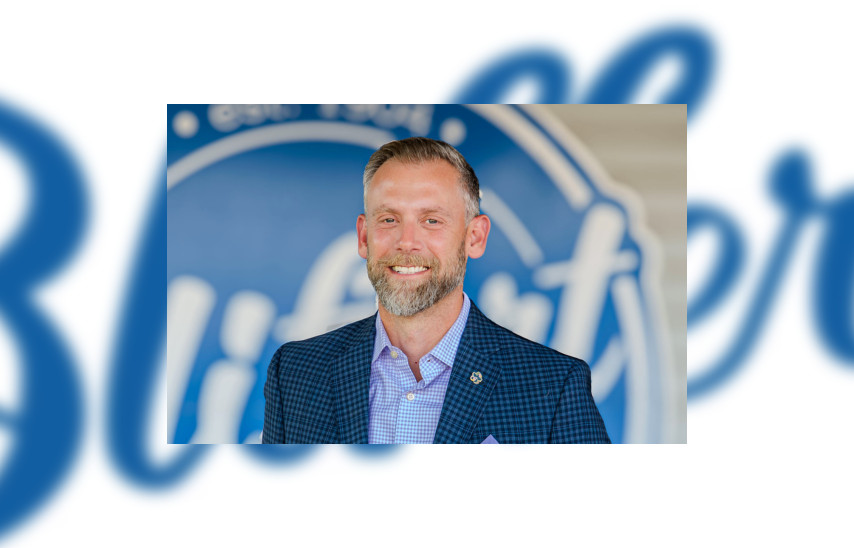
Josh Brown. (Bliffert Lumber)
ON THE LEVEL: Josh Brown takes the torch at Bliffert Lumber
By: Adam Kelnhofer, Special to The Daily Reporter//July 7, 2026//


By ADAM KELNHOFER
Special to The Daily Reporter
Bliffert Lumber CEO and President Josh Brown took the helm of the Oak Creek-based statewide building material supplier in July of 2026.
Taking over from Eli Bliffert, who is now chair of the company’s board of directors, Brown became the first person outside the Bliffert family to lead the business. The last person to run the company without the family name was Christian Meckelberg, who founded North Side Lumber & Fuel Company in Milwaukee’s north side in the late 1800s.
But this isn’t Brown’s first experience with the company. He started working for Bliffert in Milwaukee in 2001, making less than $10 an hour with no plans to stay in the lumber business.
Brown’s mind changed a few years later when he started to see a way to lead the business, which now operates 15 locations around Wisconsin.
Brown said he looked in a newspaper to find a job and landed on Bliffert with little reason beyond paying the bills. A confidant of Eli Bliffert, he said that 10 years ago he saw a path forward to becoming company leader.
“I feel like we had kind of an age split in the company,” Brown said. “We had Bliffert family members who were younger who were probably never going to be old enough at this point to step into the role, and then we also had a very aging workforce of experienced people at the same time. So, I fit into, from an age demographic, that perfect progression over time to step into that.”
Originally a New Yorker, Brown attended University of Wisconsin-Madison for political science from 1997 to 2001. But instead of going to New York University for law school, he became president and CEO of one of southeast Wisconsin’s most recognized suppliers.
In addition to his role, Brown in the mid-2010s served on the board at the Milwaukee chapter of National Association of the Remodeling Industry.
The Daily Reporter: What’s it like to go from just working at Bliffert to running the whole business?
Brown: It’s something that I never thought would happen, because I took this as a temporary job 25 years ago. But I never intended to make this a career. I’m from New York originally, and I always had plans to go back, but after taking this job I saw a path forward in a different kind of business than I went to school for. By the time I was here for 10 years, I saw the path to get to this top position.
I had been a trusted partner to Eli Bliffert for a few years at that point, and I looked around at the company and where we were going, and at the rate that we were growing. From 10 years ago forward, I always looked at it with an eye of, ‘I will need to steward this at some point and try to get my input and do the work that I did with that in mind.’
TDR: You started at Bliffert with a temporary job. What got you in the door?
Brown: Well, back in those days, I just looked in a newspaper. I had planned on only being in Milwaukee for maybe a year at the most. That was just a job I needed to earn a few bucks an hour to live here until I continued on my path back home. There was nothing in particular that drew me to lumber, besides that I knew a guy who owned a lumber yard in Brooklyn when I was growing up. It just seemed familiar, but I had zero experience and zero intention of ever being in this industry.
TDR: When you noticed there was a pathway to getting up to the CEO and president positions, what did that look like?
Brown: I feel like we had kind of an age split in the company. We had Bliffert family members who were younger who were probably never going to be old enough at this point to step into the role, and then we also had a very aging workforce of experienced people at the same time. So, I fit into, from an age demographic, that perfect progression over time to step into that.
I had very direct conversations with Eli about what I saw the future was, what I expected my future to be and what I hoped for if I was going to continue to make a lifetime commitment to this company. We always had open and honest discussions about what that could look like.
TDR: Where do you see the future of Bliffert Lumber going in the next 5-10 years and way down the road?
Brown: Well, I think in the next couple of years, continued growth and expansion through mergers and acquisitions, and then after that just some consolidation of our processes. The big thing for Bliffert going forward is our people. I see a lot of investment in our people, helping them develop, grow, give them the tools to succeed, and then also, as part of that, becoming a 100% employee-owned company in the next couple of years.
TDR: Do you already have ideas for mergers and acquisitions?
Brown: We’re always looking. Our historic tendency has been to go with family yards, maybe single or two locations, trying to help those family yards find their path to retirement. Because a lot of people don’t have someone to turn it over to anymore, or that are interested in it. So, helping them with their succession planning, and bringing our people in to help that still be a valuable asset to the community. Lumber yards are consolidating around the country, and we want to continue to have that family feel in a lumber yard all around the state.
TDR: What’s the biggest challenge for Bliffert right now?
Brown: The biggest challenge is, while we grow as much as we have over the last 25 years, still maintaining our culture, our family business feel, while having to intermingle some more overarching policies. So, aligned autonomy is what we’re trying to do. We want all of our yards to kind of be autonomous and to have the feel of their community and their people, but we need to have alignment with the Bliffert family values across the whole company.
TDR: Was there anything you learned while working for Bliffert at first that helps you in your new role?
Brown: I’ve done just about every job in the company; Working the counter and inside sales, being an estimator, being a store manager, being a salesman, has given me the ability to understand the challenges that all of our people encounter on a daily basis, and address them to try and make everything more efficient, and our people’s lives easier.
TDR: Any advice for anyone else who might want to follow in your footsteps, whether it’s at Bliffert or any other company?
Brown: I think it’s that perfect story to see. I started at nine bucks an hour working the counter. It’s kind of cliche, but if you work as hard as you can, and you bring ideas to the table, and you’re not afraid to put yourself out there, then anything’s possible.
Related Articles

Related Content






Today’s News
- Fraser and HD Hyundai eye Superior shipyard for modernization
- TOP BIDDERS: The biggest recent winning bids from around Wisconsin | July 27
- Interstate 41 work continues with $167M contract
- Sixth Street roundabout in Milwaukee could be reworked
- Wisconsin lawmaker accepts award for helping pass DACA bill
- Plans for $107M Wauwatosa library gain momentum
- Trump signs additional tariffs on Canadian steel, aluminum and lumber
- Wisconsin Pre-Bid Meetings – Week of July 27, 2026
- Feds commit $5B to AI-powered research for construction
- Worker files NLRB complaint against Wisconsin painters union
- Lawsuit challenges Wisconsin Supplier Diversity Program
- Sheboygan TID proposal targets public incentives of $5M or more








Project Profiles
- First prefabricated bridge in US installed in Eau Claire County
- Illinois developer worked with Wisconsin contractor to build 258-unit Wauwatosa apartment complex
- VJS Construction raises the roof for Bruce Guadalupe Community School expansion project
- Microgrid pilot project will store energy for village affected by outages
- Dane County sees uptick in highway work zone crashes, on track to exceed last year
- The Hop streetcar will debut newest service route in fall with limited service
- FPC Live slims venue proposal to 1 downtown building
- Children’s Hospital urgent care center in Milwaukee gets first round of city approval
- With Sonag Construction shut down, feds move to block indicted owner from collecting leftover assets
- Four contractors selected to build border wall prototypes
- UW-Milwaukee’s Greenstreet shaping minds (and the city)
- Turning the Corner(s) (PHOTO SLIDESHOW)