


 Free Newsletter

MnDOT seeks construction manager for $86M ‘campus redevelopment’

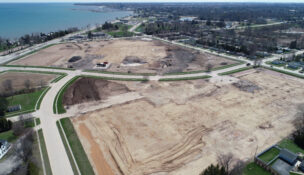
A new MnDOT campus in Virginia would create more space to accommodate maintenance work on larger modern vehicles. (Photo courtesy of MnDOT)
MnDOT seeks construction manager for $86M ‘campus redevelopment’
By: Bridgetower Media Newswires//October 16, 2024//


By Brian Johnson
BridgeTower Media Newswires
Snowplows and other essential Minnesota Department of Transportation vehicles are getting bigger — and the aging, 65-year-old Virginia, Minnesota, facility that stores and houses maintenance operations for such equipment isn’t keeping up with the times.
In a nutshell, that’s MnDOT’s reason for an $86 million effort to “redevelop” its District 1 Virginia campus with a new 175,000-square-foot truck station and headquarters facility. Site work is expected to begin next year, and the new facility will likely open in December 2027, according to MnDOT.
Roughly 100 employees work at the Virginia facility, which was built in 1959 and expanded and remodeled in 1993, according to MnDOT. The location houses about 180 vehicles, said Chris Morris, assistant maintenance engineer for MnDOT’s District 1.
Morris said the existing headquarters/truck station building is “showing its age.” At equipment repair bays during the winter months, for example, workers “probably have to take three or four vehicles out just to bring one in,” he said. “It’s just functionally obsolete.”
“Each individual vehicle is getting quite a bit larger,” he added. “Consequently, our mechanics bay is vastly undersized. That’s probably the biggest functional deficiency.”
The project has been in the works since at least 2018, when a master plan recommended replacement of the existing facilities.
MnDOT recently tapped architecture and engineering firm LHB to design the new facility and is in the market for a construction manager. MnDOT plans to have a “short list” of finalists by Oct. 28.
The new facility will rise on the existing campus at 101 Hoover Road N. in Virginia. MnDOT did a property search but didn’t find an alternative site that meets its needs, Morris said.
The department will continue to operate out of the existing site during construction, the RFQ notes, adding that the construction manager will need to “work with other members of the project team and the facility occupants to develop and implement a work plan” for ongoing operations.
“During construction, it’s going to be quite tight, but once we’re done with construction, it will serve us quite well,” Morris said.
In a project narrative, MnDOT emphasized that “every square inch” of the 18-acre campus “will be touched.” Besides the main building, scopes of work range from demolition of existing structures and removal of contaminated soils to construction of multiple storage facilities.
Funding for the project was included in the state’s 2023 transportation bill, also known as “Chapter 68,” which included new trunk highway bond authorizations for state road construction, the Corridors of Commerce program, MnDOT facilities and more, said Margaret Donahoe, executive director of the Minnesota Transportation Alliance.
Donahoe said in an email that the question of using trunk highway funds for MnDOT buildings “used to be more of a debate” at the Minnesota Legislature.
“We don’t seem to hear much questioning of that lately despite the limited funds for roadwork. Other state agencies have their buildings and facilities paid for out of the general fund,” Donahoe added.
“With a major surplus in 2023 in the general fund, it would have been a good use of one-time funds to provide the dollars needed for this facility from the surplus,” Donahoe said. “There were transportation projects funded with general fund dollars in Chapter 68, most in the $5 million to $25 million range, but MnDOT facilities continue to be funded out of the trunk highway fund.”
From a design standpoint, MnDOT said in a project document that the new building will need to meet the requirements of the Minnesota B3 Sustainable Building Program, which is intended to make buildings more sustainable and energy efficient.
MnDOT said the design team will make recommendations on sustainable elements, such as photovoltaic power generation. The department also said it plans to have electric vehicle charging stations at the site to meet the needs of the public and its own fleet of vehicles.
Related Articles

Related Content





Today’s News
- Dangerous tornadoes hit the western Fox Cities
- Fraser and HD Hyundai eye Superior shipyard for modernization
- TOP BIDDERS: The biggest recent winning bids from around Wisconsin | July 27
- Interstate 41 work continues with $167M contract
- Sixth Street roundabout in Milwaukee could be reworked
- Wisconsin lawmaker accepts award for helping pass DACA bill
- Plans for $107M Wauwatosa library gain momentum
- Trump signs additional tariffs on Canadian steel, aluminum and lumber
- Wisconsin Pre-Bid Meetings – Week of July 27, 2026
- Feds commit $5B to AI-powered research for construction
- Worker files NLRB complaint against Wisconsin painters union
- Lawsuit challenges Wisconsin Supplier Diversity Program








Project Profiles
- First prefabricated bridge in US installed in Eau Claire County
- Illinois developer worked with Wisconsin contractor to build 258-unit Wauwatosa apartment complex
- VJS Construction raises the roof for Bruce Guadalupe Community School expansion project
- Microgrid pilot project will store energy for village affected by outages
- Dane County sees uptick in highway work zone crashes, on track to exceed last year
- The Hop streetcar will debut newest service route in fall with limited service
- FPC Live slims venue proposal to 1 downtown building
- Children’s Hospital urgent care center in Milwaukee gets first round of city approval
- With Sonag Construction shut down, feds move to block indicted owner from collecting leftover assets
- Four contractors selected to build border wall prototypes
- UW-Milwaukee’s Greenstreet shaping minds (and the city)
- Turning the Corner(s) (PHOTO SLIDESHOW)