


 Free Newsletter

ON THE LEVEL: At CBG, Kahl thinks stricter bidding standards could help fight misclassification
ON THE LEVEL: At CBG, Kahl thinks stricter bidding standards could help fight misclassification
By: Dan Shaw, [email protected]//July 30, 2020//


With thousands of construction projects large and small going on at any given time in Wisconsin, state and local officials have a heavy responsibility making sure everyone is adhering to employment, safety and health laws.
Over the past 13 years, that burden has been lightened a bit by the work of Robb Kahl and his colleagues at the Construction Business Group. As executive director of that group, Kahl oversees a team of eight investigators who regularly go out to job sites to look into alleged violations of labor laws and other regulations and report their findings to the appropriate authorities.
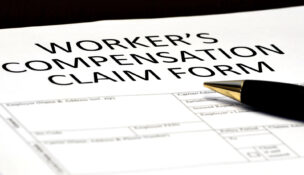
By far the most rampant abuse in the construction industry is worker misclassification. Companies that violate the law in this way avoid paying unemployment-insurance taxes and worker’s compensation premiums by taking workers who should be deemed full-time employees and instead having them classified as independent contractors.
The scheme is harmful not only because it deprives state government of much-needed revenue; it also makes it harder for contractors who are paying their taxes to hold down their bid prices and win contracts.
For those reasons, Kahl says, any attempt to crack down on worker misclassification should be an easy sell. The only people who stand to lose are the ones violating the law.
“We have to break down their business model because it works, their business model does work for them,” he said. “Not for the state, not for their workers, but it works for them.”
Besides cracking down on worker misclassification, Kahl is also seeking to tighten the criteria used to decide which contractors should be allowed to bid on projects. Kahl, also a former a state legislator and former mayor of Monona, said Wisconsin’s responsible-bidder standards are looser than those of many other states.
Here, his case in point is the natural-gas explosion that leveled a large part of downtown Sun Prairie in the summer of 2018. VC Tech, the Michigan-based excavating contractor responsible for the line strike that caused the blast, was never officially registered to do business in Wisconsin. Even worse, Kahl said, it appears to have since returned to the state under a different name.
Kahl recently sat down with The Daily Reporter to discuss the Construction Business Group’s work to fight misclassification, uphold safety standards and generally improve working conditions in the construction industry. (This article has been edited for clarity and brevity.)
The Daily Reporter: How do you think Wisconsin is doing in its fight against worker misclassification?
Kahl: I think we do a great job, but I can tell you were maybe catching 15% of the other bad actors. It’s so prevalent in our industry. And I’m really worried because when you have an economic downturn – which we saw back in 2008 when I was starting out at CBG – that really puts pressure on our industry. And then there is more malfeasance and acts that we just can’t overcome with our little enforcement agency.
And it puts pressure on our law-abiding contractors, so we’ll keep doing what we’re doing. But I do have some concerns that the pressures of the industry are going to only amplify the problem.
TDR: How is the coronavirus pandemic putting the industry under more pressure?
Kahl: Well, I suspect our state transportation fund is going to have a budget shortfall of anywhere between $200 million and $600 million. You know we just didn’t have people driving for four or five months, at least not at the level where you’d like to see it. And tourism is doing OK but not at the level we’re historically used to here in Wisconsin. So that also affects driving miles.
We also have a great capital budget that the governor put forward and got through the building commission. A lot of that was UW building projects, and that’s a different funding source than the operating budget. But there’s going to be, I’m sure, some questions on: Do we step back on the borrowing level?
So we are going to have to figure out, from a funding standpoint, where we can fill some gaps.
TDR: How could cracking down on misclassification and tightening bidding standards help?
Kahl: Well, we saw a huge leap between 2015 and 2018 in the number of out-of-state contractors taking local public-works projects. And that was $77 million going out the door, just literally going to contractors from a place like Mississippi, who just takes the money with them. So you’ve lost $70 million that would have gone to an in-state contractor and their workers.
I’m not saying we should forbid out-of-state contractors from bidding on projects in the state of Wisconsin. By no means. But make them comply by certain minimum standards. That would require beefing up our responsible-bidders standards.
TDR: How would you do that?
Kahl: A lot of these folks, they never register to do business in the state. Or they’ve been disbarred in other states or by the federal government. They shouldn’t be doing business here. Or they don’t have to show compliance with our drug-testing requirements, which have been on the books for years for public-works jobs.
They’re also supposed to be paying withholding taxes and state and federal taxes. So, by a conservative estimate, the state is losing out on a couple hundred million dollars a year in tax revenue from these folks. So we’ve got this budget hole in transportation. And you’ve got a budgetary challenge in the capital budget. And you’ve got people not paying their taxes to the tune of a couple of hundred million dollars, because they’re misclassifying workers or they’re just simply not paying taxes.
I think we can fill our budgetary holes by simply strengthening our standards in the state. Again, it’s not strengthening them to the point of barring out of state contractors from performing work here. It’s strengthening them to make sure that everybody plays by the same rules. Follow @TDR_WLJDan
Related Articles

Related Content


Today’s News
- Dangerous tornadoes hit the western Fox Cities
- Fraser and HD Hyundai eye Superior shipyard for modernization
- TOP BIDDERS: The biggest recent winning bids from around Wisconsin | July 27
- Interstate 41 work continues with $167M contract
- Sixth Street roundabout in Milwaukee could be reworked (UPDATED)
- Wisconsin lawmaker accepts award for helping pass DACA bill
- Plans for $107M Wauwatosa library gain momentum
- Trump signs additional tariffs on Canadian steel, aluminum and lumber
- Wisconsin Pre-Bid Meetings – Week of July 27, 2026
- Feds commit $5B to AI-powered research for construction
- Worker files NLRB complaint against Wisconsin painters union
- Lawsuit challenges Wisconsin Supplier Diversity Program







Project Profiles
- First prefabricated bridge in US installed in Eau Claire County
- Illinois developer worked with Wisconsin contractor to build 258-unit Wauwatosa apartment complex
- VJS Construction raises the roof for Bruce Guadalupe Community School expansion project
- Microgrid pilot project will store energy for village affected by outages
- Dane County sees uptick in highway work zone crashes, on track to exceed last year
- The Hop streetcar will debut newest service route in fall with limited service
- FPC Live slims venue proposal to 1 downtown building
- Children’s Hospital urgent care center in Milwaukee gets first round of city approval
- With Sonag Construction shut down, feds move to block indicted owner from collecting leftover assets
- Four contractors selected to build border wall prototypes
- UW-Milwaukee’s Greenstreet shaping minds (and the city)
- Turning the Corner(s) (PHOTO SLIDESHOW)